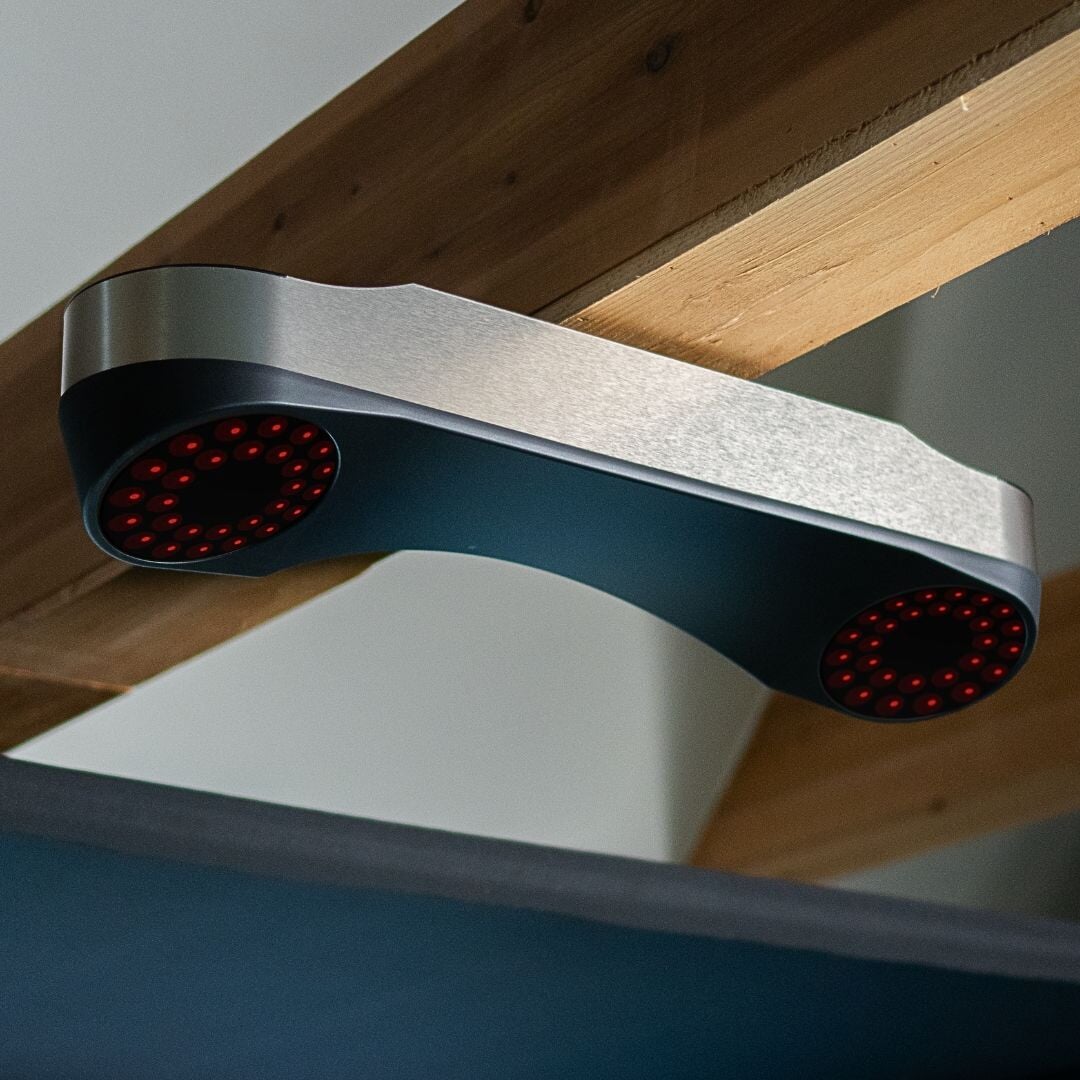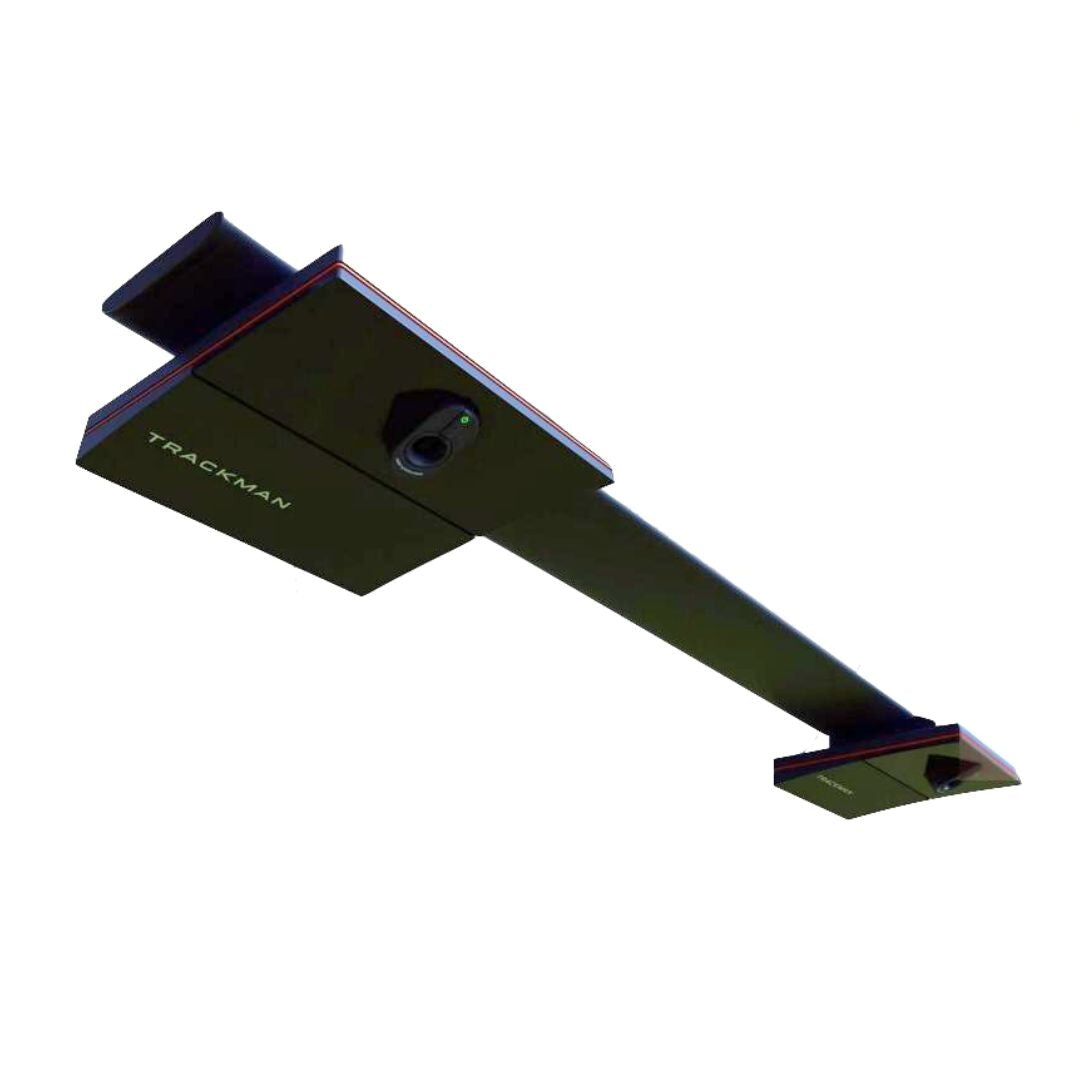
If you have done any research on premium home golf simulators, you have landed on the Trackman iO. It is the ceiling-mounted overhead unit inside the Trackman SwingBay bundle, and for buyers who want to build their own simulator room rather than buy a pre-packaged system, the iO is available standalone through authorized retailers.
Prices were checked at the time of writing and may change. Check the retailer for current pricing.
This coverage draws on manufacturer specifications, published performance data, and what real owners report from using this unit in home and commercial simulator installations.
QUICK VERDICT
- Best for: Serious home sim builders who want tour-level radar accuracy from an overhead mount without ball stickers or mat sensors
- Key strength: Dual Doppler radar delivers 50+ parameters with the same accuracy Trackman deploys on tour, with zero consumables
- Key weakness: Premium pricing positions it above most home sim budgets; ceiling mount requires dedicated room with proper clearance
- Bottom line: If your room and budget can support it, the Trackman iO is the overhead radar standard for home simulators. Nothing at its price point delivers comparable data with less friction.
What the Trackman iO Actually Is
The iO is not a mat-based launch monitor you place behind the ball. It mounts to the ceiling of your simulator room and tracks every shot from above using dual Doppler radar, the same core technology Trackman uses across their entire product line, including the Trackman 4 that tour professionals use for fitting.
The overhead position has real advantages. You get no interference from your stance, no mat placement calibration, no requirement to position the unit relative to your ball. The iO sees the shot from above impact and tracks the ball in 3D from the moment it leaves the face through its full carry trajectory.
The practical result: you set up your room once, mount the unit, calibrate it, and from that point forward you walk in, hit, and get data. No positioning ritual before every session. That consistency is worth more than most people account for when evaluating overhead versus floor-based monitors.
Data Coverage: 50+ Parameters, No Compromises
The Trackman iO measures over 50 club and ball parameters. That is not marketing arithmetic, it is a reflection of what dual Doppler radar captures when calibrated correctly in a dedicated room.
The core ball data: ball speed, launch angle, launch direction, backspin, sidespin, total spin, spin axis, peak height, hang time, carry distance, and total distance. The core club data: club head speed, club path, face angle, face-to-path, angle of attack, smash factor, and dynamic loft. Those parameters matter for a reason. If you are trying to understand why your driver carries 220 versus 240, or why your irons spin inconsistently, ball speed alone does not tell you. Spin axis, face-to-path, and attack angle fill in the full picture.
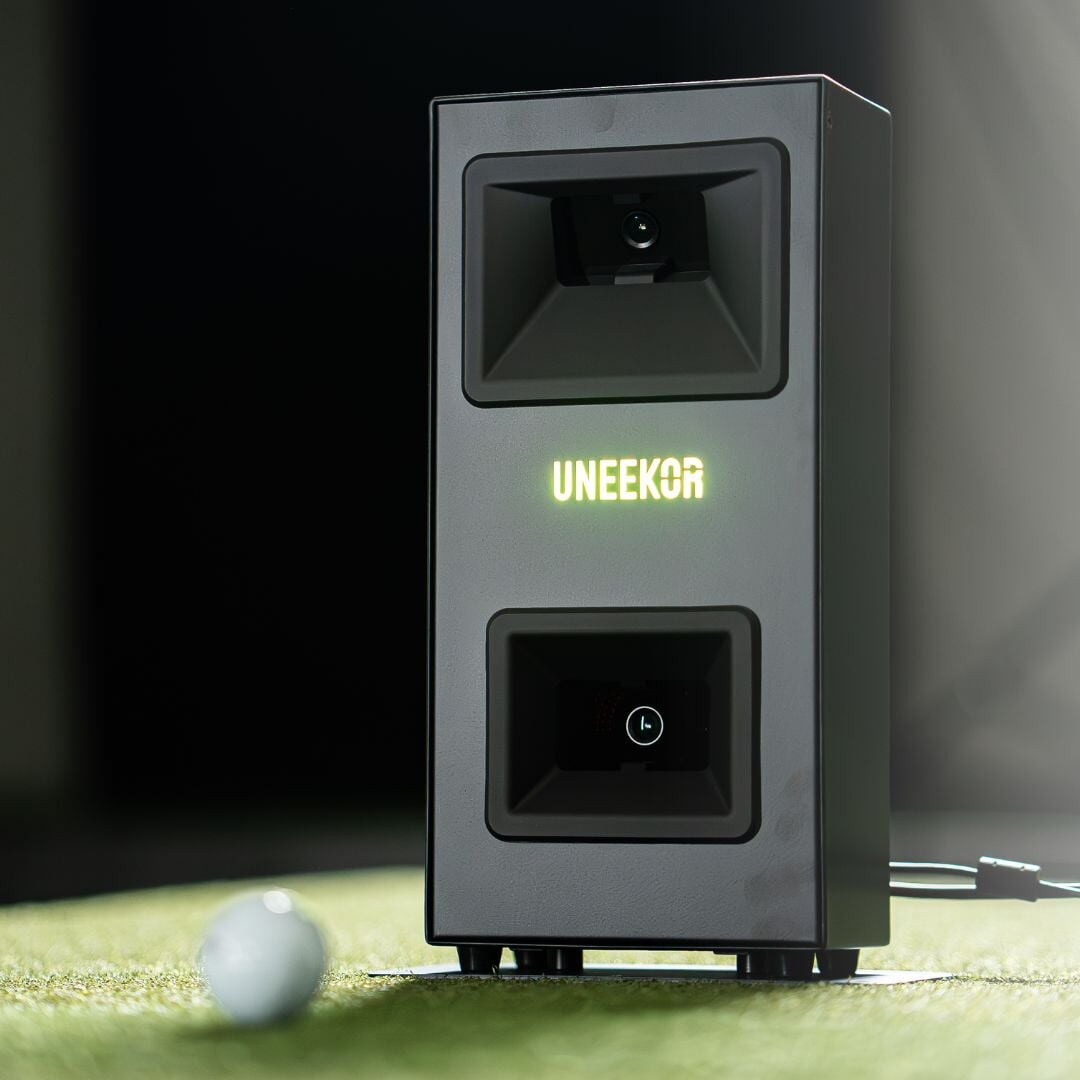
The iO delivers all of it without ball marking stickers. Camera-based overhead monitors like the Uneekor EYE XO require marked balls for full club data. Radar does not. You use any ball you would play on a real course, and the system tracks it clean.
Room Requirements
Ceiling mount means you need ceiling clearance. Trackman recommends a minimum of 10 feet of ceiling height for the iO, with 11 to 12 feet preferred for driver swings. The unit mounts above the hitting position and needs unobstructed line of sight to the ball at impact and the initial ball flight path.
Width and depth: the room should accommodate your swing arc plus a minimum of 2 feet on each side, and depth should be at least 15 feet from the hitting position to the impact screen. For most home sim setups that use a 10 or 12-foot wide enclosure, a 12 by 18 foot room with 10-foot ceilings is the working standard.
If your space does not have that ceiling height, the iO is not your monitor. A floor-based radar unit like the Garmin R50 or a mat-based camera system like the SkyTrak ST PRO works in lower-ceiling spaces.
Software and Simulation
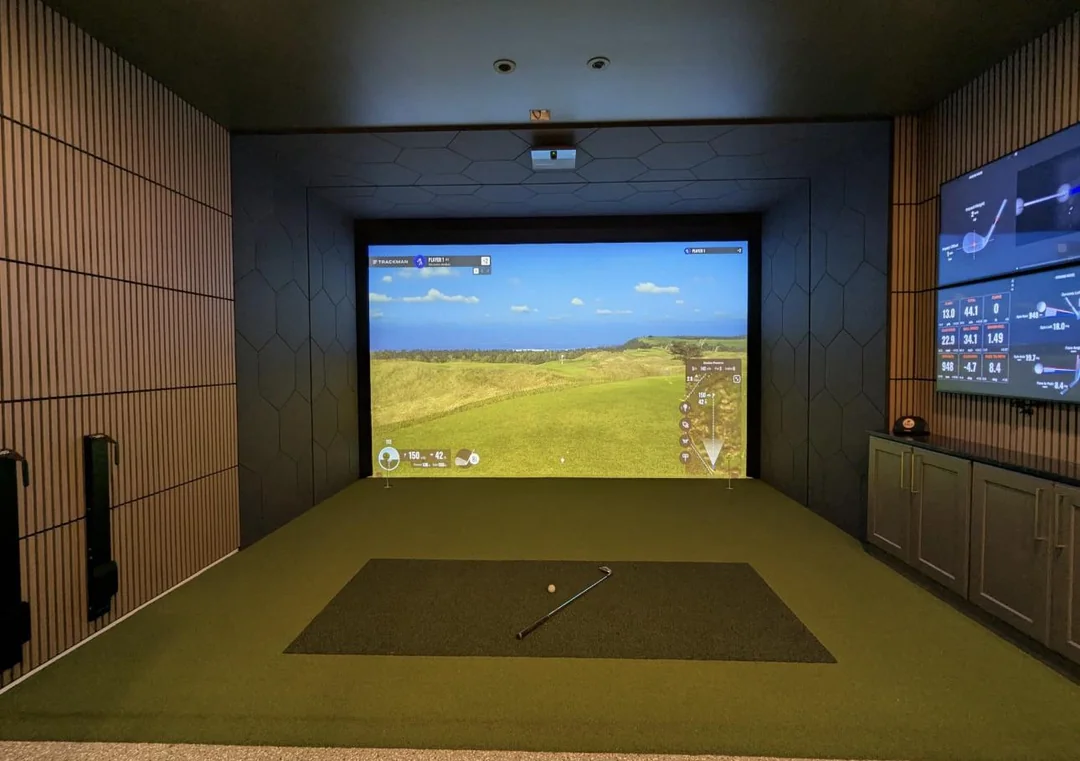
The iO runs on the Trackman platform, which includes simulation software with virtual courses. For buyers who want the full package, Trackman bundles the iO with the SwingBay enclosure, impact screen, hitting mat, and course simulation in the TrackMan iO SwingBay at $18,295 for the Home Edition.
Standalone iO buyers integrate the monitor into their own simulator setup and license simulation access separately. The Trackman platform supports a range of simulation environments. Contact Trackman directly for current standalone licensing details.
The data platform is the same regardless of whether you buy the bundle or the standalone unit. Shot data, ball trajectory visualization, swing analysis, and practice modes all work identically. The difference is the packaging, not the capability.
How It Compares to the Competition
At the premium ceiling-mount tier, the Trackman iO competes with the Uneekor EYE XO2 at approximately $10,999 and the ProTee VX at $4,000 to $5,000.
The Uneekor EYE XO2 uses three high-speed cameras instead of radar. Camera-based systems deliver precise photometric measurements at impact but require consistent lighting. Radar works in variable lighting without adjustment. For high-volume commercial bays with constant session turnover, radar's consistency advantage compounds over time.
The ProTee VX is a lower-price ceiling option that integrates with E6 Connect and World Golf Tour. It is a solid monitor at its price point, but Trackman's data depth and software ecosystem give the iO a distinct edge for buyers who care about analytics, not just simulation.
Against the Trackman 4 at $25,995: both use dual Doppler radar, both deliver comparable accuracy. The Trackman 4 is portable and used by tour professionals on the range and in fitting studios. The iO is ceiling-mounted and designed for a dedicated room. For a home simulator, the iO is the right product in the Trackman lineup.
Who Should Buy the Trackman iO
The Trackman iO is for one buyer: the person building a serious dedicated home simulator room who wants the best radar data available from an overhead mount, with no ball stickers, no mat positioning, and consistent session-to-session accuracy that does not require re-calibration.
If you are building an entry or mid-range simulator, there are more cost-effective paths. The best home golf simulators at the $5,000 to $12,000 range use monitors that deliver strong data quality at a fraction of the iO's price. The iO sits at the top of the home sim market for a reason, and that reason is not just the name on the box. It is the accuracy, the data depth, and the zero-maintenance radar system that works every session without consumables or calibration drift.
For the buyer it is built for, it is the right call.
Check Current Price at Shop Indoor Golf
This coverage draws on manufacturer specifications, published performance data, and what real owners report from using this unit. Prices were checked at the time of writing and may change.