Prices were checked at the time of writing and may change. Check the retailer for current pricing.
This guide draws on current retail pricing from major simulator retailers, manufacturer specifications, and real total-cost data from home simulator builds at each tier.
Golf simulator pricing spans from $500 to $100,000 depending on what you define as a simulator. A Garmin R10 and a hitting net for $700 is technically a simulator setup. So is a $60,000 Trackman iO installation in a custom-built room. The number that matters for most home buyers sits somewhere between those extremes, and it depends on three things: how accurate the data needs to be, how close to real course play the experience needs to feel, and how much space you are building into.
This guide breaks down the real cost by tier so you know what you are actually getting at each price point.
QUICK COST SUMMARY
- Entry (data practice, net only): $600 to $2,000 total
- Mid-tier (virtual course play, full enclosure): $5,000 to $12,000 total
- Premium (full simulator room, top-tier monitor): $15,000 to $35,000 total
- Commercial or pro-grade: $30,000 to $100,000-plus
- The launch monitor is 40 to 60 percent of the total package cost at any tier. That is where the most significant quality differences are.
What Is Included in the Cost?
A complete golf simulator has six components. The price of a "simulator" can mean just the monitor, or it can mean the full package. Know what is included before you compare prices.
- Launch monitor: The core sensor that captures ball and club data. Ranges from $499 for the Garmin R10 to $25,000-plus for professional units.
- Impact screen: The screen the ball hits. Ranges from $200 for a basic practice net to $800-plus for a quality impact screen rated for driver speeds.
- Enclosure: The frame and side baffles that define the hitting bay and catch mis-hits. Ranges from $600 to $2,500 for a standard home enclosure.
- Projector: Projects the course image onto the screen. Ranges from $400 for a usable 1080p short-throw unit to $2,000-plus for a 4K high-brightness unit.
- Hitting mat: The turf surface you swing from. Ranges from $150 to $500 for a quality mat.
- Software subscription: E6 Connect, GSPro, TGC 2019, or similar. Ranges from $200 to $500 per year depending on the platform. Some monitors include software; others charge separately.
Entry Level: $600 to $2,000
At this budget you are buying a data practice setup, not a virtual course experience. The launch monitor captures shot data, the hitting net stops the ball, and you practice indoors with real feedback on every shot. What you are not getting is a projected virtual course or a full enclosure.
What $600 to $1,000 gets you:
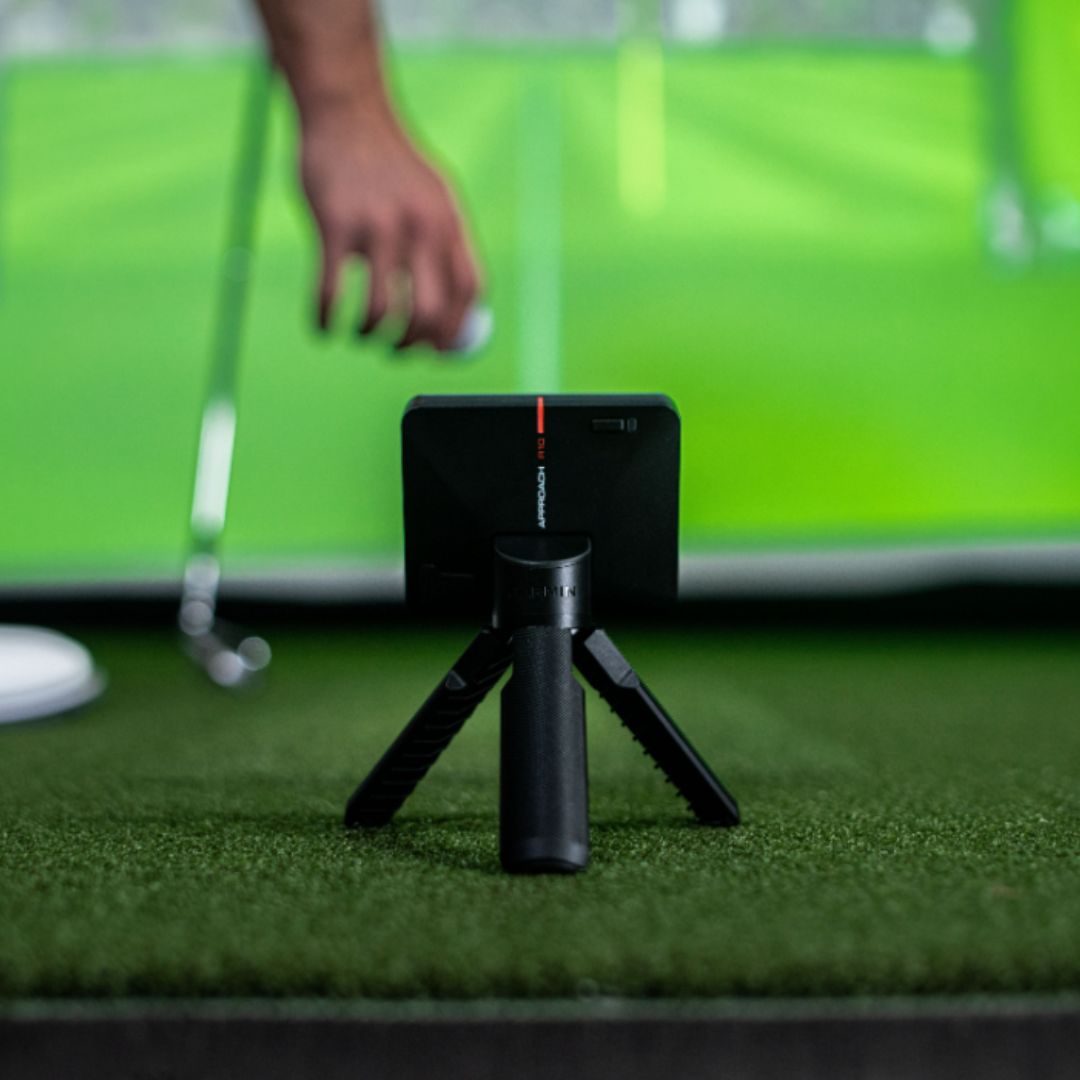
- Garmin Approach R10 launch monitor: $499
- Practice hitting net: $150 to $250
- Hitting mat: $150 to $200
- Garmin Golf app (included): $0 for basic features, $99/year for E6 integration
The Garmin R10 tracks 12 metrics including ball speed, launch angle, and spin. It works at the range and indoors. At $499 it is the most accessible entry point to data-driven practice. Add a net and mat and you have a functional indoor practice setup for under $1,000.
What $1,500 to $2,000 gets you:
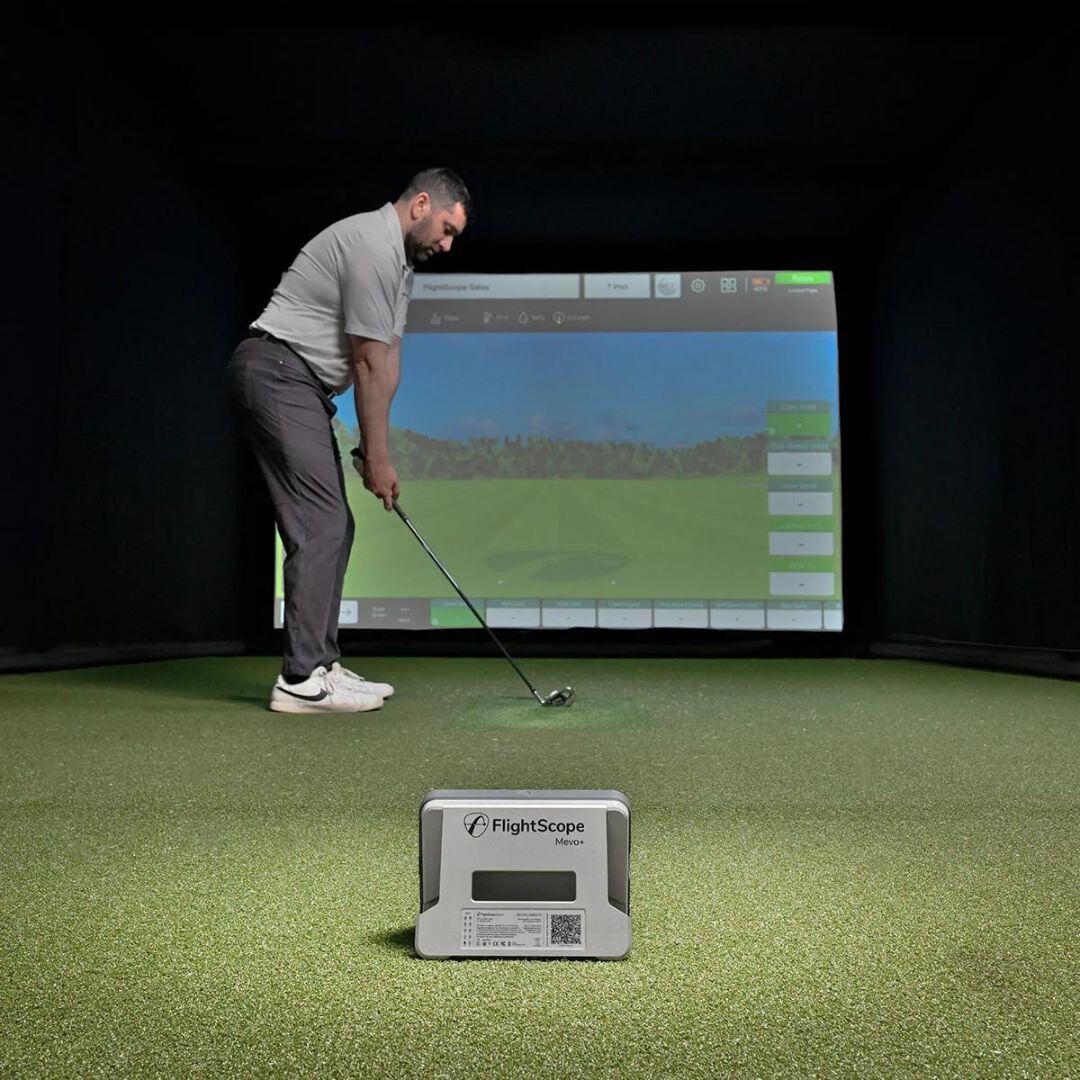
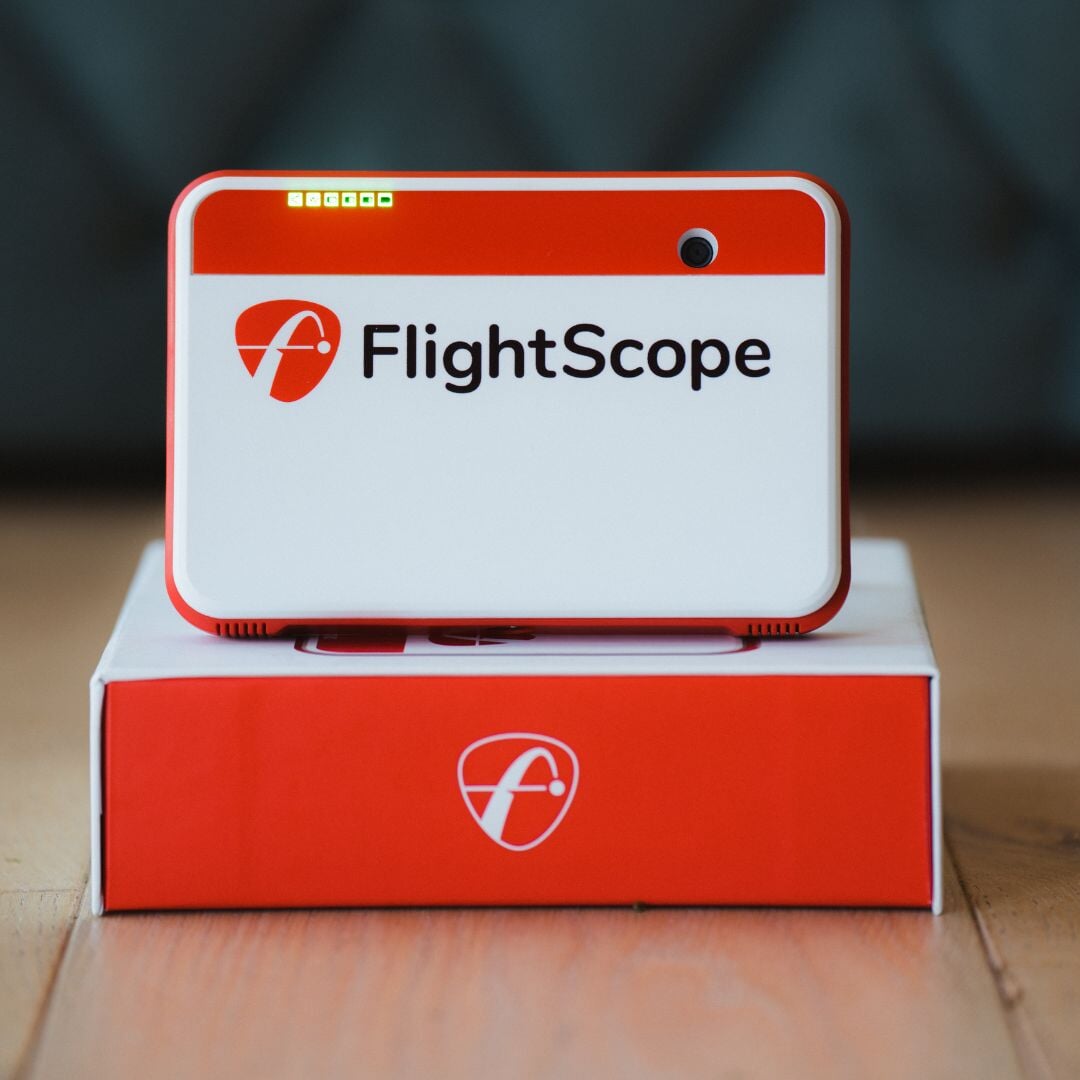
- Rapsodo MLM2PRO at $699 or FlightScope Mevo Gen2 at $1,299
- Practice net or basic impact screen
- Hitting mat
- E6 Connect (included with Mevo Gen2)
The Mevo Gen2 at $1,299 includes E6 Connect for virtual course play through your phone or tablet, which moves this tier slightly toward a simulator experience even without a projector. Connect it to a TV mounted on the wall and you have basic virtual course play for around $1,800 total.
Mid-Tier: $3,000 to $8,000
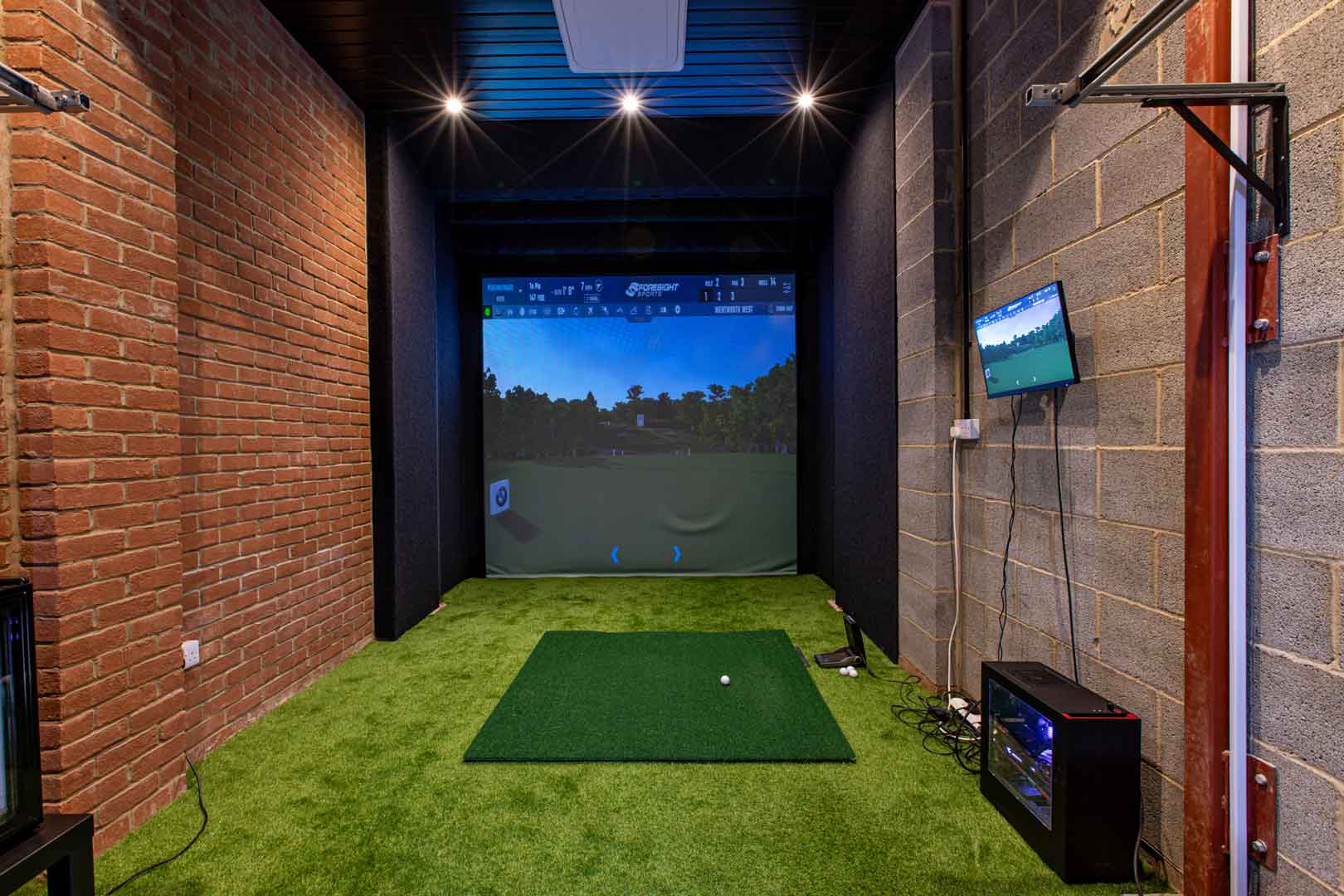
This is where a full simulator experience begins. You are getting a photometric camera monitor for better indoor accuracy, a full enclosure and impact screen, a short-throw projector for course imagery, and simulation software with a large course library. The difference from entry level is night and day: you are playing virtual golf, not just practicing swings.
What $3,000 to $5,000 gets you:
- SkyTrak ST Max at $2,995 or Foresight GC2 at $2,999
- Basic enclosure and impact screen: $800 to $1,200
- Short-throw projector: $500 to $800
- Hitting mat: $200 to $400
- Software subscription: $200 to $400/year
At this tier you are building a real simulator. The ST Max and GC2 are both side-mounted camera systems that work in tight rooms and deliver solid indoor accuracy. With a quality enclosure and projector, this setup is a genuinely compelling home practice and entertainment system.
What $5,000 to $8,000 gets you:
- SkyTrak ST PRO at $4,995 or Foresight GC3 at $4,999
- Quality enclosure with side baffles: $1,000 to $2,000
- Bright 1080p projector: $700 to $1,200
- Quality hitting mat: $300 to $500
- Software (often included or low annual cost)
The ST PRO and GC3 add club data tracking on top of ball data, which is the meaningful step up from the ST Max and GC2. Club data gives you attack angle, club path, face angle at impact, and dynamic loft, information that ball-only monitors cannot provide. That club data is what makes the difference for golfers who are using the simulator to actually improve rather than just play virtual rounds.
Premium: $10,000 to $25,000
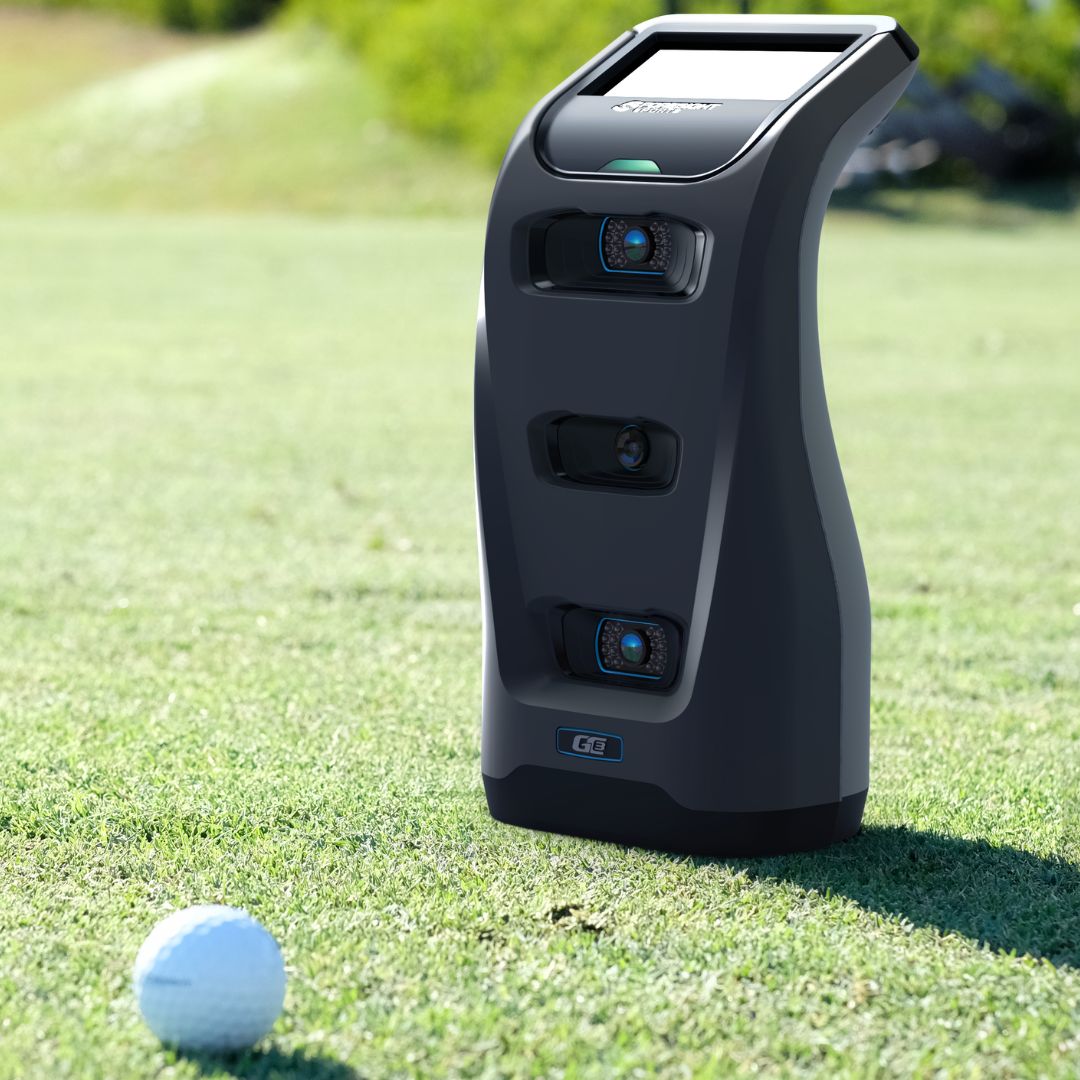
At this tier you are buying professional-grade accuracy, premium software libraries with hundreds of courses, and often the room build itself. The launch monitors at this level are what tour players and fitting studios use for real data.
What $10,000 to $15,000 gets you:
- Uneekor EYE XO2 at $5,999 or Bushnell Launch Pro at $3,000 to $4,000
- Premium enclosure with floor-to-ceiling netting: $2,000 to $3,500
- 4K or high-lumen 1080p projector: $1,200 to $2,500
- Quality flooring, lighting, and room finishing: $1,000 to $3,000
- Multi-year software license: $500 to $1,000
What $15,000 to $25,000 gets you:
- Trackman 4 at $18,995 to $24,995 or Uneekor EYE XR at $6,999
- Custom-built enclosure or full room conversion
- Premium projection and display setup
- Professional installation included
Trackman 4 at $18,995 (indoor/outdoor) or $24,995 (full tour package) is the benchmark for premium home and professional studio builds. It is what most tour players use on their own setups and what the top fitting studios run. If you are building a serious home studio and accuracy is non-negotiable, this is the tier.
Subscription Costs: What Gets Added Every Year
The launch monitor price is the hardware cost. Software adds an annual or one-time fee that many buyers do not account for upfront.
- E6 Connect: Included with select monitors (Mevo Gen2, Bushnell Launch Pro) or approximately $200 to $500/year as a standalone subscription
- GSPro: One-time purchase around $200 for the base license, with course packs available separately
- TGC 2019: One-time purchase, used by many Foresight and SkyTrak setups
- Trackman simulation: Annual subscription, typically $200 to $500 per year depending on tier
- SkyTrak Play and Improve: Required for full simulation features, approximately $200/year
Over three years, software costs add $600 to $1,500 to the total cost depending on the platform. Factor that into your budget comparison between monitors.
Hidden Costs: What People Forget to Budget
The launch monitor and package price are the visible costs. These are what people frequently forget:
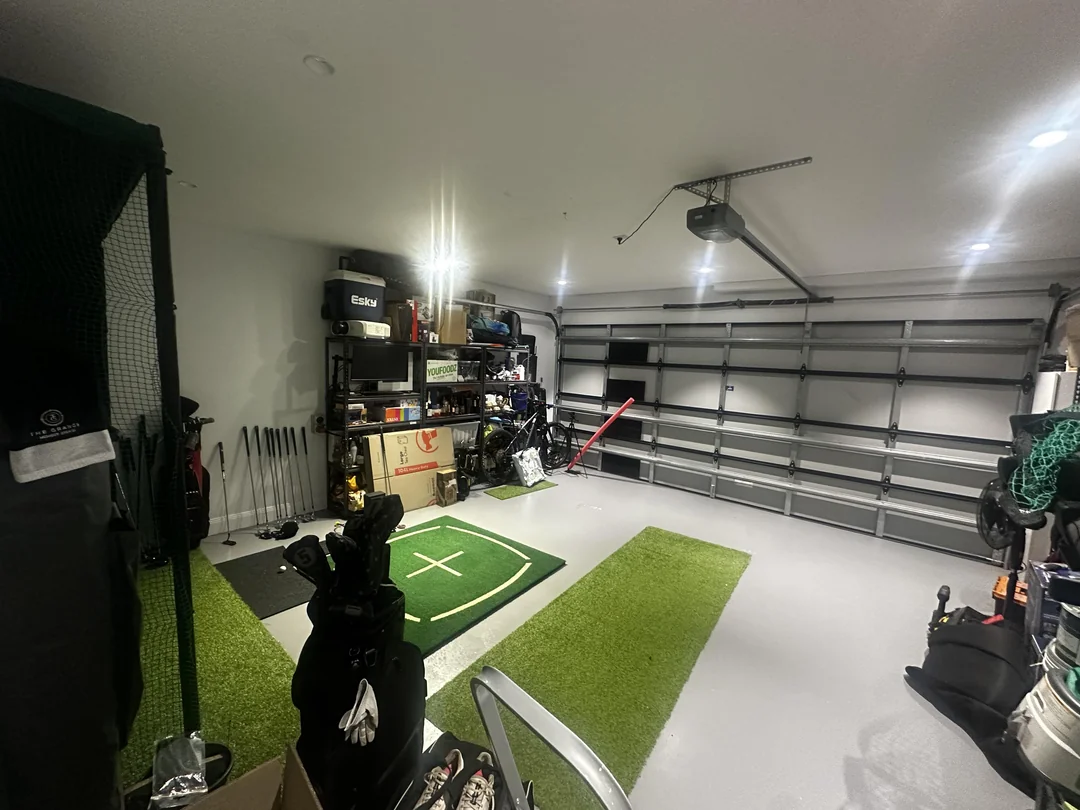
- Room preparation: Electrical, drywall, flooring, lighting. Can add $1,000 to $5,000 to a basement or garage conversion.
- Climate control: A mini split for a dedicated room runs $1,500 to $3,000 installed.
- Ceiling clearance: If your ceiling is too low, adding clearance through a dropped ceiling removal or attic modification can run $2,000 to $8,000.
- Projector mount: A proper ceiling or wall mount for the projector costs $50 to $200 and requires the right mounting point in the ceiling.
- Computer or PC: Some monitors require a dedicated PC to run the simulation software. Add $600 to $1,500 for a simulation-capable computer if you do not already have one.
What to Buy at Each Budget: Our Recommendations
Under $5,000 Total Setup
Complete setup guides at every budget under $5,000: from a Garmin R10 and net for $700 to a mid-tier camera monitor with basic enclosure.
See Under $5,000 OptionsHome Simulator ($5,000 to $20,000)
Full simulator setups for home use: enclosure, projector, monitor, and software. Ranked by value at each tier.
See Home Simulator SetupsFrequently Asked Questions
How much does a basic golf simulator cost?
A basic golf simulator setup using a Garmin Approach R10 with a practice net and hitting mat costs approximately $700 to $1,000. For a full simulator experience with a projector, enclosure, and virtual course software, the entry point is around $3,000 to $5,000 using a mid-tier camera monitor.
How much does a golf simulator cost per month?
A complete home simulator amortized over five years runs roughly $100 to $500 per month in equipment costs plus $20 to $50 per month in software subscriptions. Compared to commercial simulator bay rental at $30 to $60 per hour, a home setup becomes cost-effective quickly for regular users who play 10 or more hours per month.
What is the cheapest full simulator you can buy?
The least expensive complete simulator setup with projector, screen, and virtual course play comes in around $3,000 to $4,000 using the SkyTrak ST Max at $2,995 paired with a basic enclosure and short-throw projector. Below that price, the experience is data practice with a monitor and net rather than full virtual course simulation.
Is it worth buying a golf simulator?
For golfers who practice 10 or more hours per month, a home simulator typically pays for itself within two to four years compared to commercial simulator rental fees. The bigger return is practice availability: a home setup means practice is possible year-round, any time, with no booking required. That consistency is what actually improves scores.
What is the most expensive home golf simulator?
Trackman 4 setups with a custom-built room, premium projection system, and professional installation can run $60,000 to $100,000 for a fully finished installation. For most home buyers, the practical ceiling for a home build is $20,000 to $35,000 for a finished room with a Trackman 4 or top-tier Uneekor monitor.
Bottom Line
The most common question is "what does a golf simulator cost?" The honest answer is $700 for a practice setup or $5,000 to $15,000 for a full home simulator experience. What you spend determines the accuracy of the data, the quality of the virtual course experience, and how much real estate the setup requires.
Use the guides below to find complete packages at the budget you are working with. Each guide covers the best setups at that tier with real component recommendations, not just monitor prices.